 Orlenta Pest Control Service
Mosquito and Tick Barrier Program
Tappahannock's mosquito problem is two different problems wearing the same bite. Along Hoskins Creek, the Rappahannock shoreline near June Parker Marina and the low ground off Mount Landing Road, tidal and marsh water…
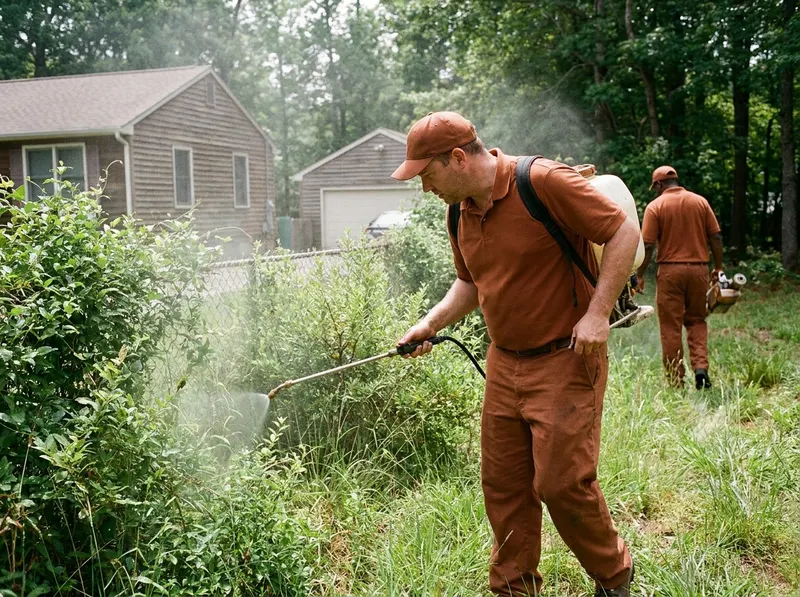
- Included: a written property walk noting breeding water and tick edges, treatment of shaded harborage (shrub undersides, ivy, tree line, deck and porch skirting, fence lines), larvicide in water that cannot be drained, and a field-edge tick band where the mowed lawn meets tall grass or woods.
- Timing: most Tappahannock and Essex County yards are treated in one visit of about 45–90 minutes; recurring visits run roughly every 3 weeks in peak season, and treated surfaces are typically dry within about 30–60 minutes.
- Cost: single yard treatments start at $250, with larger wooded or waterfront lots typically $375–$650 per visit — a ballpark until a technician measures the treated area on site.
- What we target: Asian tiger mosquitoes and other container breeders, marsh-edge mosquito pressure, and blacklegged (deer) and American dog ticks along field edges, trails and deer paths.
- Booking: call (804) 445-8072 for a free on-site visit; we walk the yard with you, mark the water sources, and quote the season in writing before anything is applied.
Tappahannock's mosquito problem is two different problems wearing the same bite. Along Hoskins Creek, the Rappahannock shoreline near June Parker Marina and the low ground off Mount Landing Road, tidal and marsh water produces flights of mosquitoes that arrive at dusk from off the property — those yards need dense harborage treatment on the downwind, shaded side of the house and honest expectations about pressure that never fully stops. In the Historic District along Prince Street and Water Lane, in Hobbs Hole, and on the shaded older lots in Essex Village, the mosquitoes are usually born on the property: English ivy beds, boxwood interiors, corrugated downspout extensions, tarps over a woodpile, a saucer under a potted fig, and gutters full of maple seed. A container the size of a coffee cup can produce mosquitoes for weeks. Finding and emptying those is the part of the visit that changes the season, and it is why every visit includes the walk, not just the spray.
Ticks follow a different map. The heaviest pressure we see is along mowed-to-unmowed transitions — the back edges of larger lots in Center Cross, Champlain, Dunnsville and Millers Tavern, deer trails cutting through pine and sweetgum, the brush lines behind homes off the Airport Road corridor near Tappahannock-Essex County Airport, and the rough and tree lines around Hobbs Hole Golf Course. Ticks do not fly and they do not cross open, sunlit turf well, so a tick program is a band treatment plus habitat work: keep the lawn edge cut, pull leaf litter and ivy back from the play area and the dog run, and treat the first several feet of the transition rather than fogging the whole woodlot. If you and the dog use a trail from the yard to the water, say so during the walk — trail edges get treated as part of the band.
When a barrier program fits: you have kids, dogs or an outdoor porch you actually want to use from May through October, and you're tired of a candle-and-fan strategy. When it doesn't: if the mosquitoes are coming from a neighbor's uncut pool, a roadside ditch you don't own, or a wooded swamp on the far side of a property line, a barrier reduces bites in the used part of your yard but will not clear the whole parcel — we'd rather say that in the driveway than sell you a season that disappoints. A one-time treatment a couple of days before a graduation party or an oyster roast is a legitimate use; it is not a season, and we won't price it as one. For a single-issue tick concern with no mosquito complaint, a spring-and-early-summer tick band is often the smarter, cheaper choice than a full program.
Safety near wells, gardens and the river is a design decision, not a disclaimer. Products are applied to foliage and structural harborage per label directions, and vegetable beds, blooming plants where pollinators are working, fish ponds and open water get skipped or buffered. Tell us where the wellhead, the beehive, the koi and the tomatoes are, and where the dog naps. Each visit leaves written findings — water sources located, areas treated, areas intentionally not treated, and what to fix before the next visit. Inspected, sealed, documented: on a mosquito program, the sealing is the standing water, and the line holds where the water stops.
What it costs
Every job gets a firm, written price after a free on-site visit.
Common questions
How much does a mosquito and tick barrier program cost in Tappahannock?
How often does a Tappahannock yard need re-treatment during the season?
Is a mosquito and tick program safe around my well, dog and vegetable garden in Essex County?
Will a barrier treatment eliminate every mosquito on my Tappahannock property?
Where do ticks come from on properties around Center Cross, Champlain and Millers Tavern?
Ready to get started?
Tell us about your mosquito and tick barrier program job in Tappahannock and we'll send a clear, written quote — usually the same day.